
What It Costs to Skip This Now
Every homeowner who puts off storm-proofing their garage door is betting that the next wind event will be mild. That bet doesn't always pay off. A garage door that buckles or blows open mid-storm doesn't just mean a broken door — it means wind and rain pouring into your garage, water damage to anything stored inside, a torn opener rail, bent track, and in bad cases, pressure pushed into the attic space that can lift roof decking. The repair bill for a door that fails during a storm is almost always higher than the cost of reinforcing it beforehand, and you lose the use of your garage, often your only secure entry point, right when you need it most.
Why the Garage Door Is the Weakest Point in the Wall
Most exterior walls are solid, braced, and tied into the home's frame. A garage door is a large moving panel held in place by tracks, rollers, hinges, and a spring system — not a continuous structural wall. When wind hits the front of a house, it creates positive pressure pushing in and negative pressure (suction) pulling out on other surfaces. A standard residential door isn't built to resist sustained pressure from either direction the way a stud wall is. Once it fails, that opening lets wind pressurize the entire garage and push outward on the roof and walls from the inside, which is why engineers and insurers treat the garage door as the single biggest wind vulnerability on most houses.
This matters more here than in milder climates. Queen Creek homes deal with extreme heat for months, which bakes out lubricants, dries and cracks weatherstripping, and leaves hardware slightly loosened from constant thermal expansion and contraction. By the time fall wind events and the tail end of monsoon activity roll through, a lot of doors are already running on worn seals and fatigued hardware — exactly the components that matter most when wind picks up.
Signs Your Door Isn't Ready for Wind
- Cracked or shrunken weatherstripping along the bottom and sides, usually from UV exposure — this is the first thing to let wind-driven dust and rain inside.
- Visible gaps where the door meets the frame, especially at the top corners.
- Loose or rattling hardware — hinges, roller brackets, or track bolts that have worked loose from heat cycling and daily use.
- A track that's slightly bent or out of alignment, which gives the door less resistance to lateral wind pressure.
- An opener that struggles or reverses on its own, which can mean the door isn't moving smoothly in its tracks even in calm conditions.
Storm Prep Steps Worth Doing Before the Next Wind Event
Tighten and Inspect the Hardware
Walk the full track system and check every bolt, hinge, and roller bracket for looseness. Heat makes metal expand and contract, and over a long Arizona summer that movement works fasteners loose. Tightening hardware is simple, but it's also one of the biggest factors in whether a door holds its shape under pressure.
Replace Worn Weatherstripping and Seals
Weatherstripping does more than block dust — it's part of how the door stays seated against the frame. Cracked, hardened, or torn seals let wind find an edge to grab. This is a straightforward, low-cost fix that pays off every time a storm rolls through.
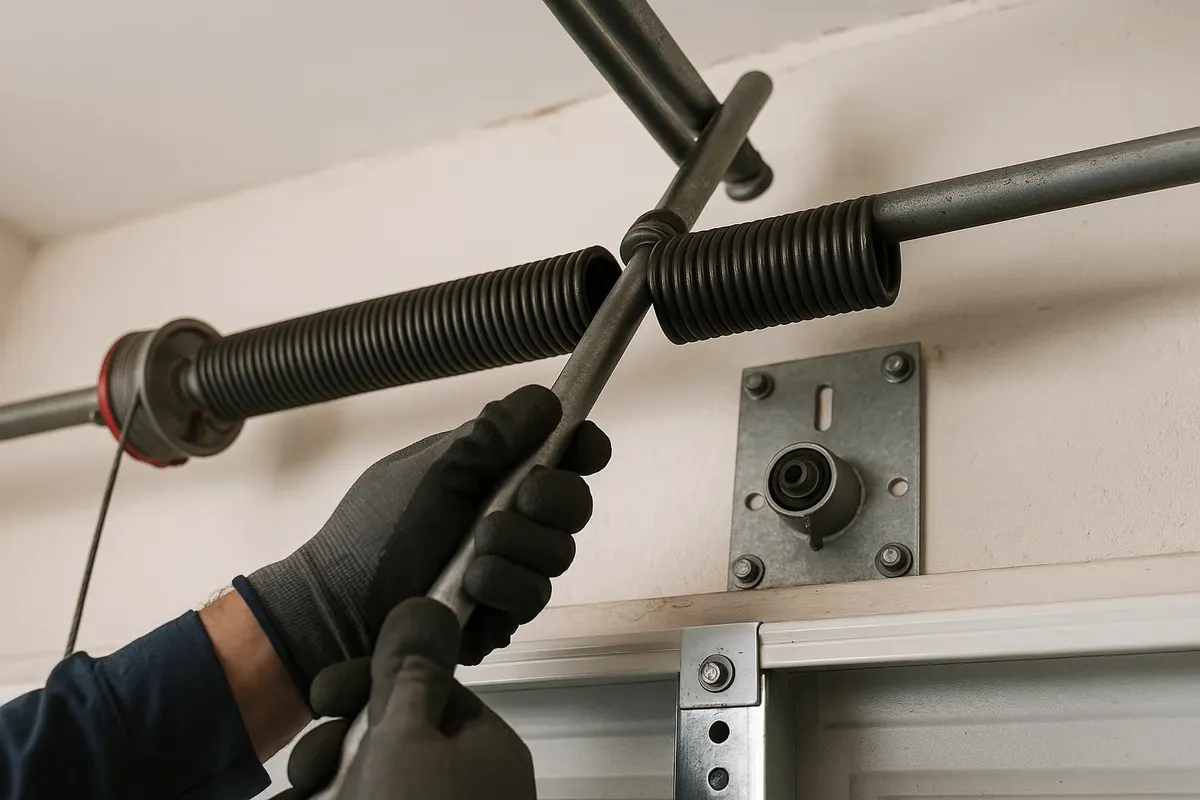
Check the Springs
Springs under uneven tension can cause a door to hang slightly crooked, which leaves one side with less resistance to wind than the other. If the door looks off-balance or one side seems to struggle, have the spring tension checked before storm season, not after a failure.
Confirm the Opener's Force Settings
Openers have force and travel settings that affect how firmly the door seats when closed. A door that doesn't fully seat, or seats too loosely, has more room to flex in wind. This is also a good time to make sure battery backup (if installed) is actually working, since storms and power outages tend to arrive together.
Consider Bracing for Severe Wind
Reinforcement kits that add horizontal or vertical bracing to the back of the door panels increase resistance to wind pressure significantly compared to an unreinforced door. For homes on more exposed lots, or anyone who's had a door flex visibly in past storms, this is worth discussing as a one-time upgrade rather than an annual repair.
Clear the Area Before Storms Roll In
- Secure or store anything near the garage that could become airborne debris and strike the door.
- Clear tracks of dust buildup from monsoon season — accumulated grit adds friction and makes the door work harder exactly when smooth operation matters most.
- Test the manual release so you can operate the door by hand if the opener loses power during a storm.
When to Call Queen Creek Garage Door Co
If your door shows gaps at the seals, hardware that's loosened up, or a panel that doesn't sit flush and square, it's time for a proper inspection rather than a guess. Our garage door maintenance visits cover hardware tightening, track alignment, and weatherstripping replacement in one trip, and if your springs are worn or unevenly tensioned, our spring repair & replacement service gets the door back to balanced before the next wind event hits. We also handle emergency calls if a door fails mid-storm and you need it secured fast.
Don't wait for the next windstorm to find out your garage door can't handle it. Call Queen Creek Garage Door Co today and get your door storm-ready before the weather turns.